
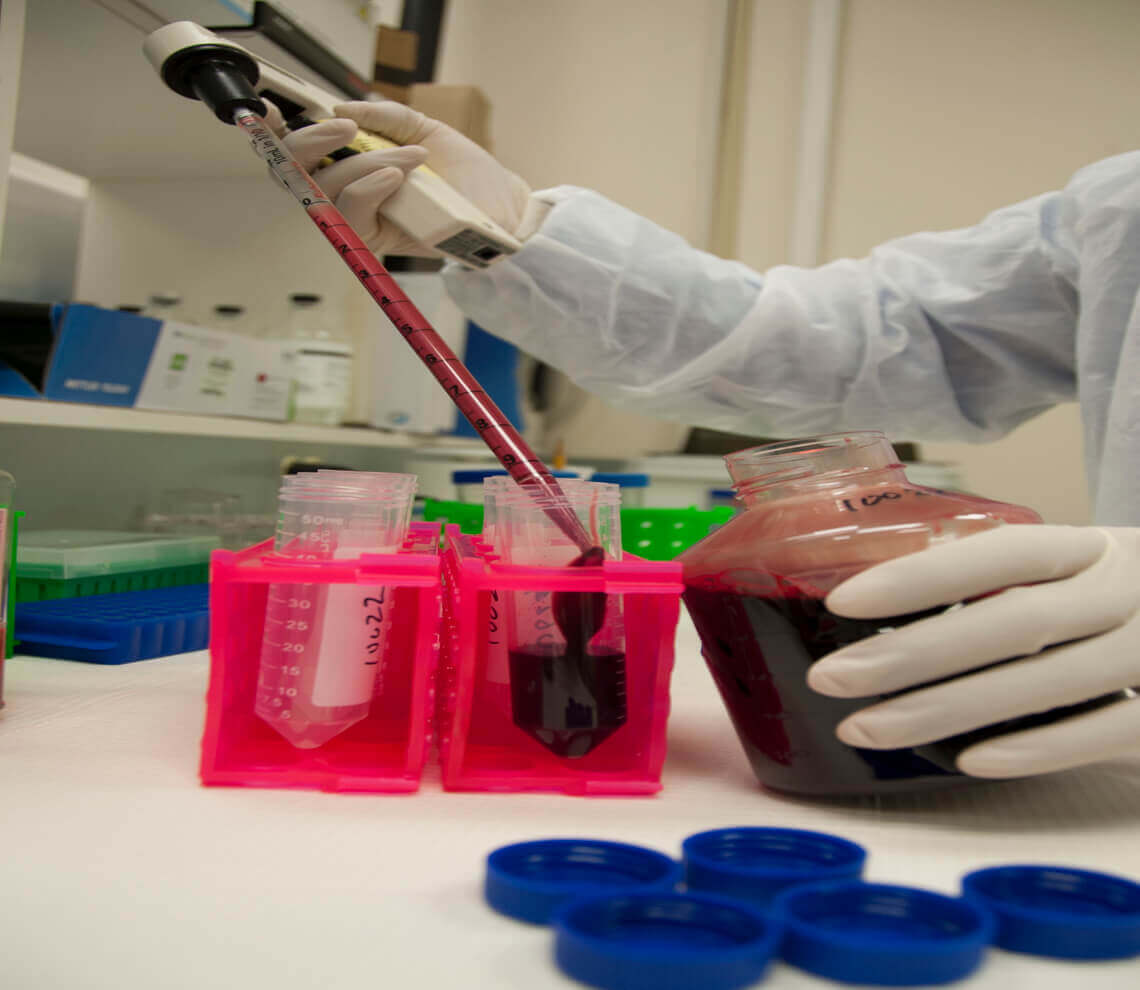
Product short description
Price:
663 EUR
Size:
50ug
Catalog no.:
GEN246023
Product detailed description
Gene name
VDR
Gene name synonims
N/A
Clone
2F4
Immunoglobulin isotype
IgG2a,k
French translation
anticorps
Category
Antibodies
Clonality
Monoclonal
Concentration
0.42 mg/ml
Latin name
Mus musculus
Purification method
Protein A Purified
Host organism
Mouse (Mus musculus)
Subcategory
Mnoclonal antibodies
Also known as
Vitamin D Receptor / VDR
Form/Appearance
PBS, pH 7.4. Sourced in Ascites.
Other gene names
VDR; VDR; NR1I1; PPP1R163; NR1I1; VDR
Tested applications:
Immunohistochemistry (IHC - Paraffin), ELISA (EIA)
Species reactivity
Human (Homo sapiens); Due to limited knowledge and inability for testing each and every species, the reactivity of the antibody may extend to other species which are not listed hereby.
Storage and shipping
For optimal long term storage, the antibody should be kept at -20 degrees Celsius. We strongly recommend to avoid freeze/thaw cycles in order to keep the activity of the antibody maximally unchanged.
Specificity and cross-reactivity
N/A; Since it is not possible to test each and every species our knowledge on the corss reactivity of the antibodies is limited. This particular antibody might cross react with speacies outside of the listed ones.
About
Monoclonals of this antigen are available in different clones. Each murine monoclonal anibody has his own affinity specific for the clone. Mouse monoclonal antibodies are purified protein A or G and can be conjugated to FITC for flow cytometry or FACS and can be of different isotypes.
Other names
vitamin D3 receptor isoform VDRA; Vitamin D3 receptor; vitamin D3 receptor; 1,25-dihydroxyvitamin D3 receptor; vitamin D nuclear receptor variant 1; nuclear receptor subfamily 1 group I member 1; protein phosphatase 1, regulatory subunit 163; vitamin D (1,25- dihydroxyvitamin D3) receptor; 1,25-dihydroxyvitamin D3 receptor; Nuclear receptor subfamily 1 group I member 1
Test
Mouse or mice from the Mus musculus species are used for production of mouse monoclonal antibodies or mabs and as research model for humans in your lab. Mouse are mature after 40 days for females and 55 days for males. The female mice are pregnant only 20 days and can give birth to 10 litters of 6-8 mice a year. Transgenic, knock-out, congenic and inbread strains are known for C57BL/6, A/J, BALB/c, SCID while the CD-1 is outbred as strain.
Properties
If you buy Antibodies supplied by MBS Monoclonals they should be stored frozen at - 24°C for long term storage and for short term at + 5°C.Human proteins, cDNA and human recombinants are used in human reactive ELISA kits and to produce anti-human mono and polyclonal antibodies. Modern humans (Homo sapiens, primarily ssp. Homo sapiens sapiens). Depending on the epitopes used human ELISA kits can be cross reactive to many other species. Mainly analyzed are human serum, plasma, urine, saliva, human cell culture supernatants and biological samples.
Description
The receptors are ligand binding factors of type 1, 2 or 3 and protein-molecules that receive chemical-signals from outside a cell. When such chemical-signals couple or bind to a receptor, they cause some form of cellular/tissue-response, e.g. a change in the electrical-activity of a cell. In this sense, am olfactory receptor is a protein-molecule that recognizes and responds to endogenous-chemical signals, chemokinesor cytokines e.g. an acetylcholine-receptor recognizes and responds to its endogenous-ligand, acetylcholine. However, sometimes in pharmacology, the term is also used to include other proteins that are drug-targets, such as enzymes, transporters and ion-channels.